The problem
The process was fine on paper. Someone still had to watch it, every day.
Across the operations teams we've worked with, the same wall keeps showing up: checking statuses, chasing approvals, reconciling records and catching exceptions by hand, every single day. That work doesn't scale with headcount, and it's the first thing that slips the moment a team gets busy. What's needed isn't another report to read, it's someone (or something) actually minding the process in real time.
What we build
Agents wired into your systems, not another tool to check.
What it changes
Less babysitting. Faster answers when it actually matters.
80%
reduction in manual ops overhead for teams running the agents
24/7
monitoring and execution, no added headcount
Faster
escalation on the exceptions that do need a person
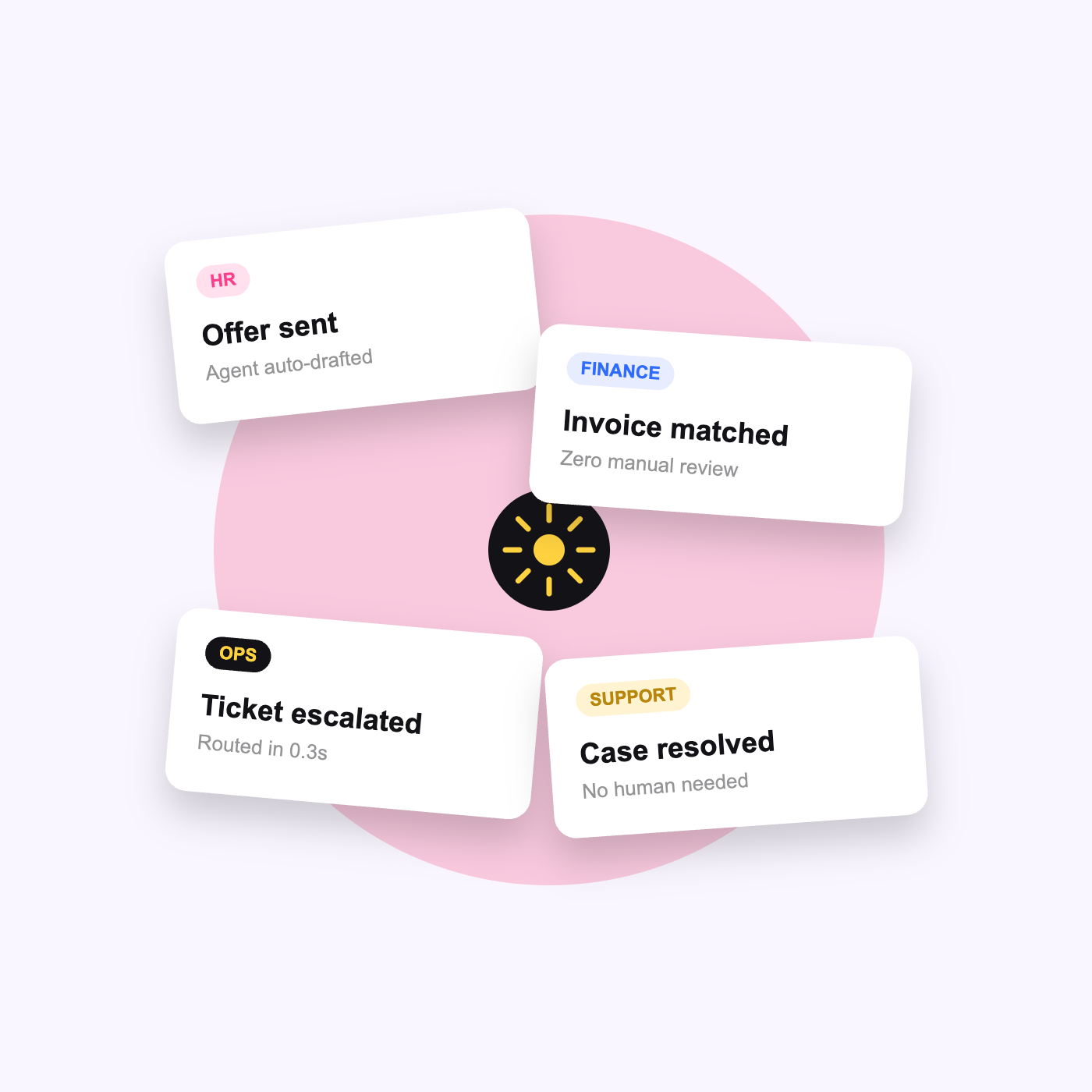
Every engagement here has looked a little different, HR ops for one client, finance reconciliation for another, stakeholder escalations for a third. What's stayed constant is the shape of the win: the routine stops needing a person, and the exceptions get to a person faster.